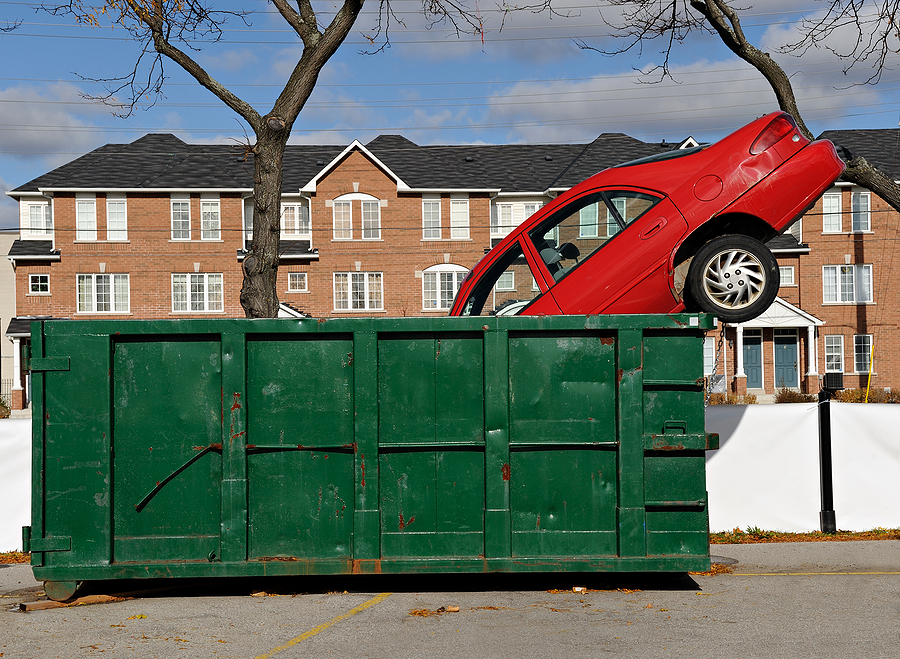
When our flatbed drives away with your old car, that's the end of the story for you — but it's just the beginning of the vehicle's second life. Ontario has one of the most developed auto-recycling systems in North America, and a modern end-of-life vehicle is recovered almost entirely rather than dumped. Here's exactly what happens to your car after you scrap it, step by step.
Step 1: Intake and documentation
Your car arrives at a certified end-of-life vehicle (ELV) facility, where its VIN is recorded and the ownership transfer is finalized so the vehicle is officially retired from the road. This paperwork matters: it's what formally ends your liability and ensures the car can't be re-registered or its identity misused. Reputable recyclers keep an audit trail for every vehicle they process.
Step 2: Depollution — draining the hazardous stuff
Before anything else, the car is 'depolluted.' Technicians safely drain and capture every fluid — engine oil, transmission fluid, coolant, brake fluid, fuel, and air-conditioning refrigerant — for proper disposal or recycling. The battery is removed (lead-acid batteries are almost 100% recyclable), as are mercury switches and other hazardous components. This step is exactly why scrapping a car through a licensed facility matters environmentally: those fluids would be disastrous in a landfill or waterway.
Step 3: Parts recovery
Next, still-usable parts are removed and catalogued for resale: alternators, starters, transmissions, body panels, lights, wheels, glass, electronics and more. This is where much of your car's value — and your payout — comes from, because a good used part is worth far more than its weight in scrap. The catalytic converter is removed here too, its precious metals destined for specialist refiners.
Step 4: Shredding and metal recovery
What's left — the stripped steel shell — is sent to a shredder that reduces it to fist-sized pieces in seconds. Powerful magnets and sorting systems then separate the ferrous metal (steel and iron) from non-ferrous metals (aluminum, copper) and residual material. The recovered metals are baled and sold to mills, where they're melted down and reborn as new steel and aluminum products — everything from rebar to new car parts.
How much of my car actually gets recycled?
In a modern Ontario ELV operation, roughly 95% of each vehicle by weight is recovered — reused as parts or recycled as metal — rather than landfilled. Steel is infinitely recyclable without losing quality, which is why using recycled automotive steel dramatically cuts the energy and emissions of making new steel from ore. Scrapping your car responsibly isn't just the easy choice; it's genuinely one of the greenest things an old vehicle can do.
Recycle your car the right way
The environmental benefit only holds if your car goes to a properly licensed, certified recycler — not an unlicensed lot that dumps fluids and abandons shells. ScrapCash GTA recycles every vehicle through certified Ontario ELV facilities, with full documentation and responsible depollution. Call (647) 983-9577 or request a 60-second quote for free same-day pickup anywhere in the GTA — top cash for you, and a proper second life for your car.
Ready to find out what your car is worth?
Call us with the year, make, model and condition — we'll lock in your top-dollar 2026 quote in 60 seconds, with free same-day pickup anywhere in the GTA.
We’re a family-run, Ontario-licensed auto recycler that has bought and recycled 15,000+ vehicles across the GTA since 2010. Our guides are based on real, day-to-day experience buying scrap and junk cars, handling ServiceOntario paperwork, and paying fair, transparent prices.